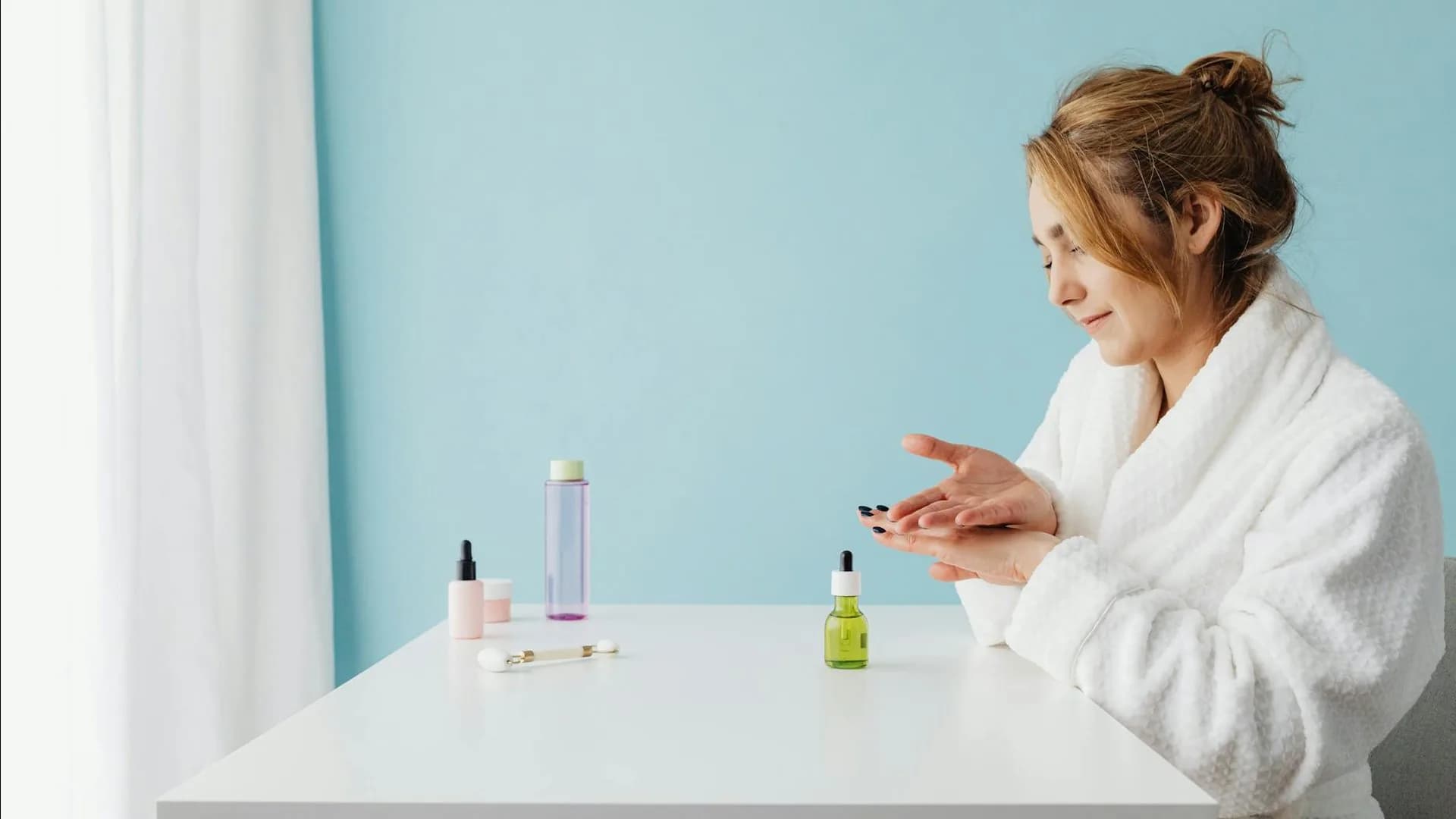
Photo: www.kaboompics.com
Skincare Routine for Pregnancy: Safe Products and Ingredients
Pregnancy brings incredible changes to your body, and your skin is no exception. You might be experiencing the legendary "pregnancy glow" — or dealing with breakouts, melasma, and sensitivity you've n...
A complete guide to pregnancy-safe skincare, what to use, what to avoid, and how to address pregnancy skin changes like melasma, acne, and stretch marks
Pregnancy brings incredible changes to your body, and your skin is no exception. You might be experiencing the legendary "pregnancy glow", or dealing with breakouts, melasma, and sensitivity you've never had before. Either way, you're probably wondering which products are safe to use and which ones need to go.

This comprehensive guide covers everything you need to know about skincare during pregnancy: which ingredients to avoid, which are safe, how to address common pregnancy skin concerns, and how to build a routine that keeps you and your baby safe while still caring for your skin effectively.
Disclaimer
This article provides general information about skincare during pregnancy. Always consult your healthcare provider or dermatologist about specific products and ingredients. When in doubt, ask your doctor.
Understanding Pregnancy Skin Changes
Quick Check
Curious if your routine matches your skin goals?
Take our 60-second skin diagnostic and get personalised ingredient recommendations.
Why Your Skin Changes During Pregnancy
Pregnancy involves significant hormonal shifts that directly affect your skin:
Increased estrogen and progesterone:
Can cause both oiliness and dryness (often at different times)
May trigger acne (especially in first trimester)
Stimulates melanin production (leading to hyperpigmentation)
Increased blood volume:
May contribute to "pregnancy glow"
Can cause flushing and redness
May make broken capillaries more visible
Stretched skin:
As your belly grows, skin stretches
Can cause stretch marks and itching
Skin may feel tight and uncomfortable
Common Pregnancy Skin Concerns
Melasma (Mask of Pregnancy):
Dark patches, usually on cheeks, forehead, and upper lip. Affects up to 70% of pregnant women. Caused by hormones + sun exposure.
Pregnancy Acne:
Hormonal fluctuations can trigger breakouts, especially in the first trimester. May occur even if you've never had acne.
Stretch Marks:
Pink, red, or purple streaks that appear as skin stretches. Most common on belly, breasts, hips, and thighs. Genetics play a big role.
Dry, Itchy Skin:
Stretching skin and hormonal changes can cause uncomfortable dryness and itching.
Linea Nigra:
Dark line that appears down the center of the belly. Normal and fades after pregnancy.
Skin Tags:
Small, soft growths that may appear in areas of friction. Harmless.
Spider Veins:
Tiny red blood vessels visible on the skin, especially on the face and legs.
PUPPP (Pruritic Urticarial Papules and Plaques of Pregnancy):
Itchy rash that appears in stretch marks, usually in third trimester. Harmless but uncomfortable.
Ingredients to Avoid During Pregnancy
The following ingredients should be avoided during pregnancy due to potential risks to the developing baby. If you're using any of these, stop and find alternatives.
Retinoids (High Risk, Avoid)
What they are: Vitamin A derivatives including retinol, retinaldehyde, tretinoin, adapalene, tazarotene, isotretinoin
Why to avoid: Oral retinoids (like isotretinoin/Accutane) cause serious birth defects. While topical retinoids have less systemic absorption, they're still not considered safe during pregnancy. Most doctors recommend avoiding all forms.
Alternatives:
Bakuchiol (plant-based, pregnancy-safe)
Azelaic acid (safe, effective for acne and pigmentation)
Hydroquinone (Avoid)
What it is: Skin-lightening ingredient for hyperpigmentation
Why to avoid: High absorption rate (35-45% absorbed systemically). Limited safety data in pregnancy. Better to be cautious.
Alternatives:
Vitamin C
Azelaic acid
Niacinamide
High-Dose Salicylic Acid (Avoid in High Concentrations)
What it is: BHA used for acne and exfoliation
Why to avoid: Oral salicylic acid (aspirin) in high doses can cause problems. While low concentrations in face washes (2% or less) are generally considered safe by many doctors, high-concentration peels and body treatments should be avoided.
What's likely safe: Low-concentration (0.5-2%) face washes that are rinsed off. Consult your doctor.
Alternatives:
Glycolic acid (considered safer)
Azelaic acid
Chemical Sunscreen Filters (Controversial, Consider Avoiding)
Ingredients of concern: Oxybenzone, avobenzone, octinoxate, octocrylene, homosalate
Why some avoid: Some studies suggest certain chemical filters may have endocrine-disrupting properties. Evidence is not conclusive, but many pregnant women prefer mineral sunscreens to be safe.
Alternative: Mineral sunscreens with zinc oxide and/or titanium dioxide
Other Ingredients to Be Cautious About
Formaldehyde and formaldehyde-releasing preservatives:
Found in some hair treatments and nail products. Avoid.
Phthalates:
Found in some fragranced products. Avoid when possible.
Certain essential oils:
Some essential oils should be avoided in pregnancy (rosemary, clary sage, juniper). When in doubt, choose fragrance-free products.
High-concentration benzoyl peroxide:
Limited data, but many doctors approve 5% or less for spot treatment. Consult your doctor.
Pregnancy-Safe Ingredients
The following ingredients are generally considered safe during pregnancy. However, always verify with your healthcare provider.
Definitely Safe
Hyaluronic acid: Hydrating, occurs naturally in the body. Safe.
Glycerin: Moisturizing, very safe.
Vitamin C (topical): Antioxidant, brightening. Safe.
Niacinamide (Vitamin B3): Barrier support, brightening, oil control. Safe.
Azelaic acid: Anti-acne, brightening. Safe (even prescription-strength is Category B).
Ceramides: Barrier repair. Safe.
Peptides: Anti-aging, firming. Safe.
Squalane: Moisturizing. Safe.
Shea butter: Moisturizing. Safe.
Centella asiatica (Cica): Soothing, healing. Safe.
Aloe vera: Soothing. Safe.
Colloidal oatmeal: Soothing, moisturizing. Safe.
Glycolic acid (AHA): Exfoliating. Generally considered safe in low-to-moderate concentrations.
Lactic acid (AHA): Exfoliating. Generally considered safe.
Likely Safe (Consult Doctor)
Low-concentration salicylic acid (≤2%): Many doctors approve face washes. Consult yours.
Benzoyl peroxide (≤5%): Limited data, but often approved for spot treatment. Consult your doctor.
Bakuchiol: Plant-based retinol alternative. Limited pregnancy-specific research, but considered safe due to mechanism.
Mineral Sunscreen Filters (Safe)
Zinc oxide: Physical UV filter. Safe. Stays on skin surface, not absorbed.
Titanium dioxide: Physical UV filter. Safe.
Your Complete Pregnancy Skincare Routine
Morning Routine
Step 1: Gentle Cleanser
Choose a hydrating, fragrance-free cleanser that won't strip your skin.
Safe options:
CeraVe Hydrating Cleanser
La Roche-Posay Toleriane Hydrating Gentle Cleanser
Vanicream Gentle Facial Cleanser
Step 2: Vitamin C Serum (Optional)
Brightens skin and helps with pregnancy-related hyperpigmentation.
Safe options:
Mad Hippie Vitamin C Serum
Timeless 20% Vitamin C + E + Ferulic Acid
Paula's Choice C15 Super Booster
Step 3: Hydrating Serum
Layer hydration, especially if experiencing dryness.
Safe ingredients: Hyaluronic acid, glycerin, niacinamide
Safe options:
The Ordinary Hyaluronic Acid 2% + B5
Vichy Minéral 89
CeraVe Hydrating Hyaluronic Acid Serum
Step 4: Moisturizer
Choose based on your skin type. Fragrance-free is safest.
Safe options:
CeraVe Daily Moisturizing Lotion (normal/dry)
CeraVe PM Facial Moisturizing Lotion (all skin types)
Vanicream Moisturizing Skin Cream (sensitive/dry)
Neutrogena Hydro Boost (oily)
Step 5: Mineral Sunscreen
Essential for preventing melasma from worsening. Choose mineral-only formulas.
Safe options:
EltaMD UV Clear Broad-Spectrum SPF 46 (zinc oxide)
Australian Gold Botanical Tinted Face Sunscreen SPF 50
CeraVe Hydrating Mineral Sunscreen SPF 30
Evening Routine
Step 1: Cleanser
Same gentle cleanser as morning. If you wore sunscreen or makeup, consider double cleansing with an oil cleanser first.
Safe oil cleansers:
DHC Deep Cleansing Oil
Burt's Bees Cleansing Oil
Plain jojoba or sunflower oil
Step 2: Treatment (If Needed)
If you're dealing with pregnancy acne, azelaic acid is your best friend.
For acne:
The Ordinary Azelaic Acid Suspension 10%
Paula's Choice 10% Azelaic Acid Booster
Prescription azelaic acid (consult doctor)
For hyperpigmentation (melasma):
Vitamin C serum
Azelaic acid
Niacinamide products
Step 3: Hydrating Serum
Same as morning, hyaluronic acid or niacinamide serum.
Step 4: Moisturizer
You can use a slightly richer moisturizer at night.
Safe options:
CeraVe Moisturizing Cream
Vanicream Moisturizing Skin Cream
First Aid Beauty Ultra Repair Cream
Step 5: Facial Oil (Optional)
Seal in moisture with a pregnancy-safe facial oil.
Safe options:
Rosehip oil (The Ordinary, Trilogy)
Argan oil
Jojoba oil
Squalane (The Ordinary, Biossance)
Best Products for Pregnancy
Best Cleansers
Budget Pick: Vanicream Gentle Facial Cleanser
Free of common irritants
Extremely gentle
Pregnancy-safe
Price: Around $9
Best Overall: La Roche-Posay Toleriane Hydrating Gentle Cleanser
Prebiotic thermal water
Ceramide and niacinamide
Fragrance-free
Price: Around $15
Best for Acne: CeraVe Foaming Facial Cleanser
Gentle enough for pregnancy
Removes excess oil
Contains ceramides
Price: Around $15
Best Serums
Best Vitamin C: Mad Hippie Vitamin C Serum
Effective vitamin C derivative
Ferulic acid and vitamin E
Clean formula
Price: Around $34
Best Hydrating: The Ordinary Hyaluronic Acid 2% + B5
Pure hydration
Simple formula
Very affordable
Price: Around $9
Best for Acne: The Ordinary Azelaic Acid Suspension 10%
Pregnancy-safe acne treatment
Also helps with pigmentation
Affordable
Price: Around $8
Best Moisturizers
Budget Pick: CeraVe Moisturizing Cream
Ceramides for barrier repair
Fragrance-free
Safe for pregnancy
Price: Around $17
Best Overall: Vanicream Moisturizing Skin Cream
Free of all common irritants
Dermatologist recommended
Ideal for sensitive pregnancy skin
Price: Around $14
Best Lightweight: Neutrogena Hydro Boost Water Gel
Oil-free
Lightweight
Pregnancy-safe
Price: Around $20
Best Sunscreens
Budget Pick: CeraVe Hydrating Mineral Sunscreen SPF 30
100% mineral (zinc oxide)
Contains ceramides
Pregnancy-safe
Price: Around $15
Best Overall: EltaMD UV Clear Broad-Spectrum SPF 46
Zinc oxide based
Contains niacinamide
Lightweight, elegant
Price: Around $39
Best Tinted: Australian Gold Botanical Tinted Face Sunscreen SPF 50
100% mineral
Natural tint
Antioxidant-rich
Price: Around $16
Best Body Products
For Stretch Marks Prevention:
Bio-Oil (contains vitamin A derivatives, controversial, some avoid)
Palmer's Cocoa Butter Formula
Burt's Bees Mama Bee Belly Butter
Plain shea butter or cocoa butter
For Itchy Belly:
Aveeno Daily Moisturizing Lotion
CeraVe Moisturizing Cream
Eucerin Original Healing Cream
Addressing Specific Pregnancy Concerns
Melasma (Mask of Pregnancy)
What is it: Dark patches on face caused by hormones + sun exposure.
Prevention:
Strict sun protection (this is the most important factor)
Wear a wide-brimmed hat outdoors
Apply mineral sunscreen religiously, reapply every 2 hours
Treatment during pregnancy:
Vitamin C serum (brightening)
Azelaic acid (safe for pigmentation)
Niacinamide products
What to expect:
Melasma often fades after pregnancy and breastfeeding, but sun exposure can make it permanent. Prevention is key.
Pregnancy Acne
Why it happens: Hormonal fluctuations increase oil production.
Safe treatments:
Gentle cleansing (don't over-wash)
Azelaic acid (first choice for pregnancy)
Low-concentration benzoyl peroxide spot treatment (consult doctor)
Low-concentration glycolic acid products
What NOT to use:
Retinoids (retinol, tretinoin, adapalene)
High-dose salicylic acid
Oral acne medications (isotretinoin is absolutely forbidden)
Tips:
Don't pick at breakouts
Keep pillowcases clean
This usually improves after first trimester
Stretch Marks
Reality check: Whether you get stretch marks depends largely on genetics. Creams and oils may help with comfort and appearance but can't prevent stretch marks entirely.
What might help:
Keep skin moisturized (may reduce itching and improve comfort)
Maintain healthy weight gain per doctor's recommendations
Stay hydrated
Ingredients that may help:
Centella asiatica (some studies suggest benefits)
Vitamin E
Cocoa butter and shea butter (moisturizing comfort)
Hyaluronic acid
After pregnancy:
Stretch marks often fade from red/purple to silvery white over time. Treatments like tretinoin (once not pregnant/breastfeeding), microneedling, and laser can improve appearance.
Dry, Itchy Skin
Why it happens: Stretching skin, hormonal changes, and reduced moisture retention.
Solutions:
Moisturize immediately after bathing
Use lukewarm (not hot) water
Choose fragrance-free, gentle products
Apply body oil or cream to belly multiple times daily
Use a humidifier in dry environments
Drink plenty of water
When to see a doctor:
If itching is severe, especially on palms and soles, contact your doctor. Intense itching can sometimes indicate cholestasis of pregnancy, a liver condition that requires medical attention.
Sensitive Skin
Why it happens: Hormonal changes can make previously tolerant skin reactive.
Solutions:
Simplify your routine
Choose fragrance-free products
Avoid new products unless necessary
Patch test anything new
Stick with gentle, simple formulas
Spider Veins and Broken Capillaries
Why it happens: Increased blood volume and hormonal changes.
During pregnancy:
There's not much you can safely do during pregnancy. Avoid hot temperatures (hot showers, saunas) which can worsen them.
After pregnancy:
Many fade naturally. Treatment options (laser, sclerotherapy) are available postpartum.
Building Your Pregnancy Skincare Kit
The Minimalist Kit (Essentials Only)
Gentle cleanser (CeraVe Hydrating or Vanicream)
Moisturizer (CeraVe or Vanicream cream)
Mineral sunscreen (EltaMD UV Clear or Australian Gold)
Belly cream (whatever feels good, plain shea butter works)
Total cost: ~$50-70
The Complete Kit
Gentle cleanser
Vitamin C serum (for brightening)
Hyaluronic acid serum (for hydration)
Azelaic acid (if dealing with acne or pigmentation)
Moisturizer
Mineral sunscreen
Facial oil (rosehip or squalane)
Belly butter or oil
Total cost: ~$100-150
What About Professional Treatments?
Safe During Pregnancy
Facials: Gentle, hydrating facials are generally fine. Avoid chemical peels, microdermabrasion, and any treatment using contraindicated ingredients.
LED light therapy: Generally considered safe, but limited research in pregnancy. Some practitioners prefer to wait.
Avoid During Pregnancy
Chemical peels (high-concentration acids)
Microneedling
Laser treatments
Botox and fillers
Retinoid-based treatments
High-frequency treatments
Best Approach
Wait until after pregnancy and breastfeeding for aggressive treatments. Focus on gentle care during pregnancy.
Postpartum Skincare
Immediately Postpartum
Hormones are still fluctuating
Continue pregnancy-safe routine, especially if breastfeeding
Skin may still be sensitive
If Breastfeeding
Many of the same cautions apply while breastfeeding, though some ingredients (like salicylic acid) may be less restricted. Consult your doctor.
Generally safe while breastfeeding:
All the pregnancy-safe ingredients
Some sources say retinol in low concentrations may be okay since systemic absorption is low
Still avoid while breastfeeding:
Prescription tretinoin (especially on areas baby might contact)
Isotretinoin
Hydroquinone
After Breastfeeding
Once you've stopped breastfeeding, you can return to your full pre-pregnancy routine, including:
Retinoids
Salicylic acid
Any treatments you paused
This is also when you can address persistent melasma or stretch marks with stronger treatments.
Frequently Asked Questions
Can I use my regular skincare during pregnancy?
Maybe, but check ingredients. Remove anything containing retinoids, hydroquinone, and high-concentration salicylic acid. When in doubt, ask your doctor.
Is "natural" skincare safer during pregnancy?
Not necessarily. Many "natural" ingredients (essential oils, herbal extracts) lack safety data in pregnancy. Some are known to be unsafe. Judge products by their specific ingredients, not marketing terms.
Will the "pregnancy glow" last?
The glow comes from increased blood volume and hormones. It may fade after delivery as hormones normalize.
When will pregnancy acne go away?
Often improves after the first trimester or after delivery. Hormones need time to stabilize.
Can skincare products harm my baby?
Most skincare products are applied topically and have limited systemic absorption. However, some ingredients (like retinoids) do absorb and pose risks. That's why avoiding known harmful ingredients is important.
Should I switch to all-natural products?
Not necessary. Many synthetic ingredients are perfectly safe, and "natural" doesn't mean safe. Focus on avoiding specific risky ingredients rather than switching to all-natural.
Is sunscreen safe during pregnancy?
Yes, essential. Mineral sunscreens (zinc oxide, titanium dioxide) are the safest choice. Sun protection is crucial for preventing and managing melasma.
Can I get facials while pregnant?
Gentle, hydrating facials are generally fine. Avoid chemical peels, microdermabrasion, and any treatments using contraindicated ingredients. Tell your esthetician you're pregnant.
What about nail polish and hair dye?
Nail polish is generally considered safe in well-ventilated areas. Hair dye is controversial; many doctors say the second trimester onward is likely fine, but you can also use highlights (which don't touch scalp) or wait.
The Bottom Line
Pregnancy skincare comes down to a few key principles:
Avoid known harmful ingredients: Retinoids, hydroquinone, high-dose salicylic acid
Choose pregnancy-safe alternatives: Vitamin C, azelaic acid, niacinamide, hyaluronic acid
Protect from the sun: Essential for preventing melasma, mineral sunscreen, hat, shade
Keep it simple: Your skin may be sensitive, so fewer products with clean formulas
Moisturize generously: For comfort and to help with stretching skin
Consult your doctor: When in doubt about any ingredient or product
Pregnancy is temporary, and many skin changes resolve after delivery. Focus on safe, gentle care that keeps you comfortable, and save the aggressive treatments for postpartum.
Related reading: Skincare Routine for Sensitive Skin, Melasma Treatment: The Complete Guide, Azelaic Acid: The Multitasking Acid, Vitamin C Serum Guide
Related Reading
Join 50,000+ beauty lovers
Enjoyed This Article?
Get our best picks, reviews, and skincare secrets delivered to your inbox weekly.
No spam, unsubscribe anytime